
In March, Sara McGarraugh led a conversation about the Trust Triangle at a Gathering Space for Strengthening Evaluation Partnerships, hosted by the Strengthening Evaluation Contracting Partnerships Initiative (SECPI). The gathering space supports evaluation consultants to learn from each other’s approaches, foster truer partnerships, and broaden their networks. This article emerged from Sara’s presentation and the group conversation, where evaluators connected applications of the Trust Triangle to their work with project partners.
What is the Trust Triangle?
Working on evaluation projects in partnership with others outside of your organization can be challenging. It requires collaboration among people who might not frequently work together and who might not know each other well.
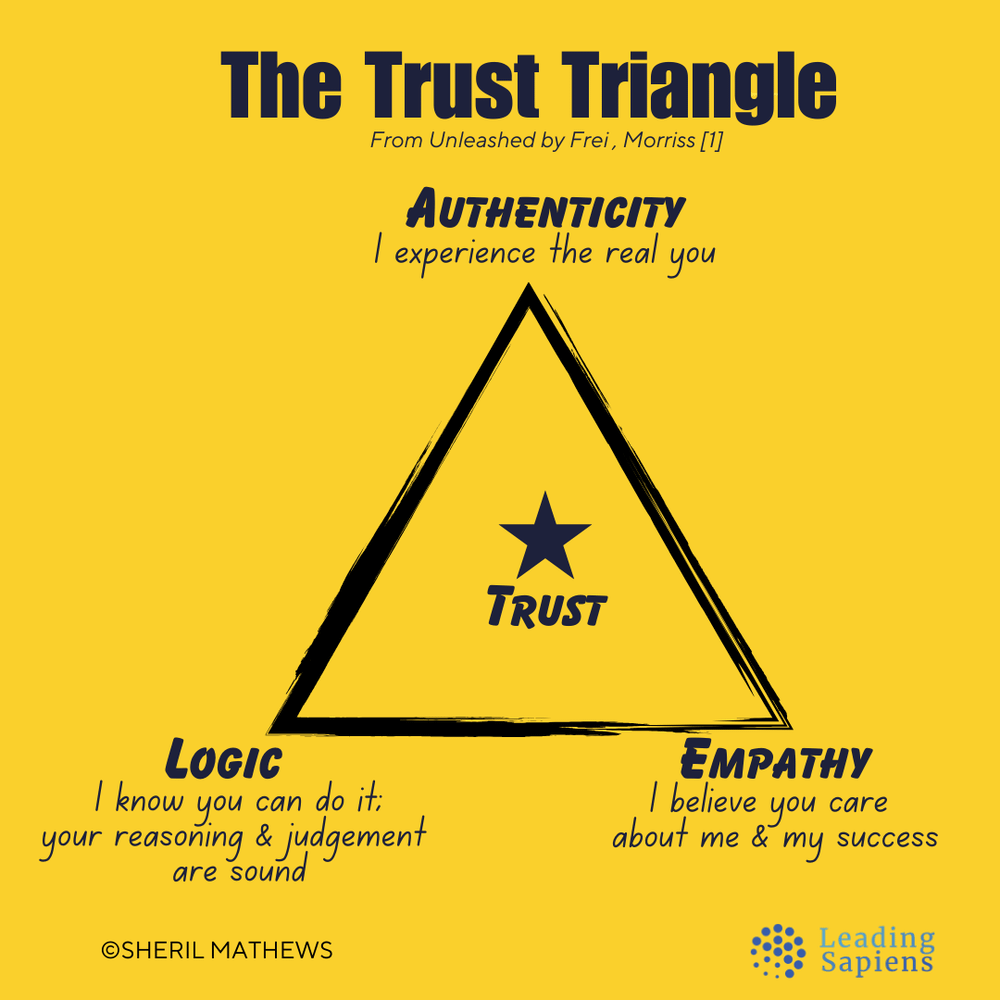
To collaborate effectively and achieve a project’s goal, fostering trust within a team is critical. The Trust Triangle can assist with this. It is a tool to help individuals and organizations assess and build trust. Coined by Frances Frei and Anne Morris, the triangle is made up of three elements that are the foundation of trust: authenticity, empathy, and logic. (Frei, Frances, and Anne Morriss. "Trust: The Foundation of Leadership." Leader to Leader 99 (Winter 2021): 20–25.) For trust to exist in a partnership, all parties need to feel:
Authenticity: They are experiencing the real you – you are showing up as your real self to this partnership.
Empathy: You care about them, their work, and their perspective.
Logic: Your reasoning and judgment are sound and thoughtful.
Why is the Trust Triangle important?
The Trust Triangle is a valuable tool to help build strong, equitable partnerships. It allows us to identify what is going well and what needs improvement in a working relationship. The three elements also acknowledge that trust is something that involves each of us as a whole person, not just as the roles we fill. Reflecting on the three elements of the triangle encourages us to see people for who they are and listen deeply to their experiences.
The Trust Triangle in use
As an example, The Improve Group evaluator Sara McGarraugh used the Trust Triangle to assess and repair challenges in a project partnership. She worked with a point person for a large institution who brought subject matter expertise to the project, and Sara was the evaluator. The relationship at the beginning of the project started off with excitement about the work. Each time they met, however, there was tension between the two. They would each ask things of the other and not have their expectations met. Sara paused to consider the Trust Triangle to understand their challenges. Breaking it down helped Sara realize that they shared low empathy and logic. To solve this, Sara suggested an informal lunch with the partner, where the two could connect as people, without a project agenda. This helped build their relationship and restore empathy, which then led to conversations to better understand each other’s logic, thereby leading to deeper trust and a successful project.
What makes the Trust Triangle work?
Gathering Space participants offered the following insights into what makes the Trust Triangle work:
The Trust Triangle must be used proactively. It can be a helpful tool for establishing how a team will work together from the beginning of an assignment. If used regularly and well, it may help prevent tensions in the first place.
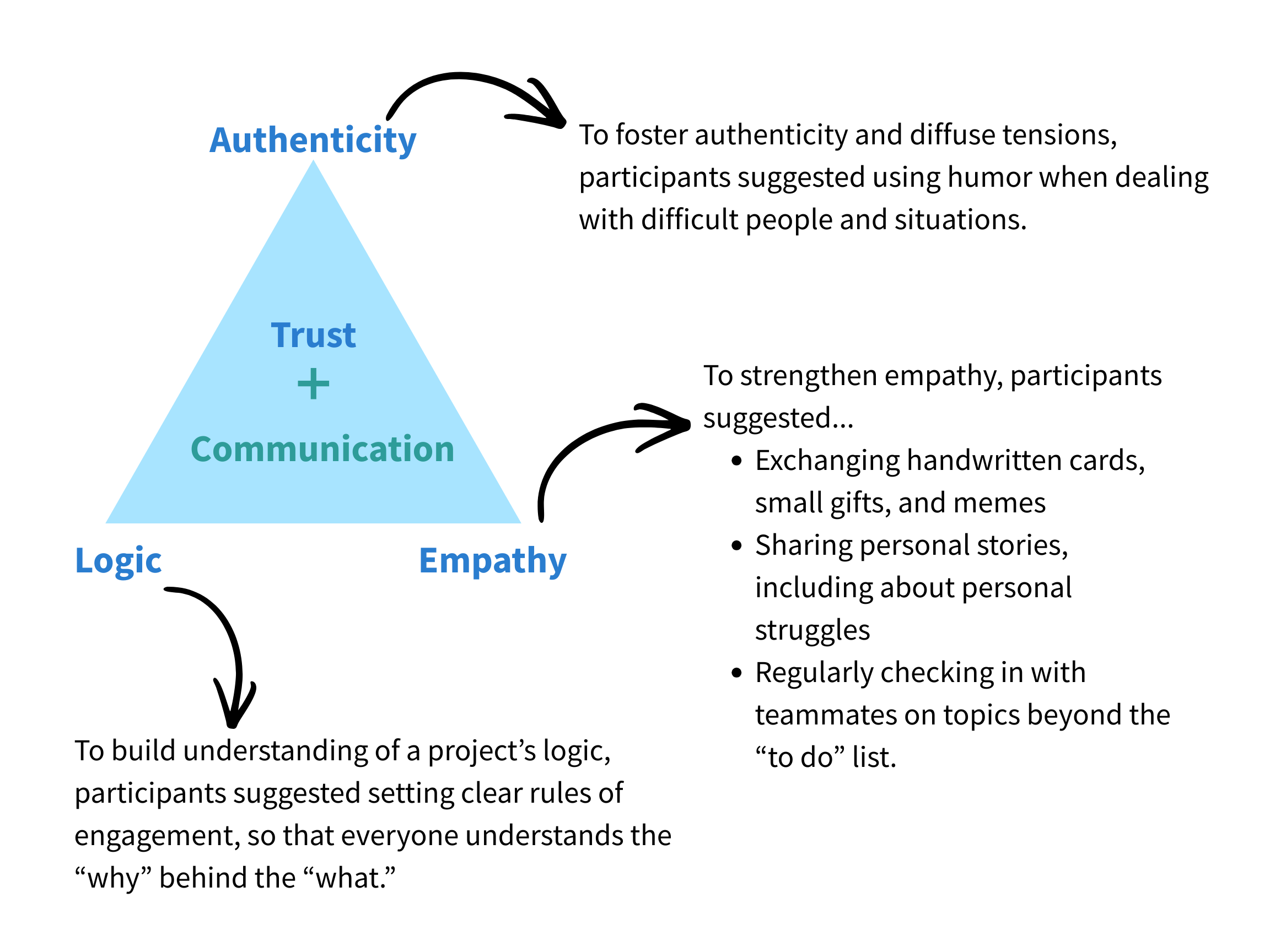
Add communication to its center. Ongoing, transparent communication through weekly or biweekly meetings can facilitate senses of authenticity and empathy and an understanding of each other’s logic. One participant noted that, after regular team meetings were cut to save money, the team no longer understood each other’s daily struggles, and things began to fall apart. Our conversation encouraged her to reinstate those meetings.
Consider power dynamics. Hierarchies and power imbalances can make it difficult to establish authenticity and empathy, since in those settings, showing up as one’s real self can feel risky. In those situations, those with power or in leadership roles need to set the tone.
Build trust gradually. Since the vulnerability required to establish authenticity and empathy can feel risky, taking regular small steps in each direction can help build a solid foundation that creates space for larger steps later.
Remember that trust building is a two-way street. Not everyone enters a partnership with the same intent or practice fostering trust. For this reason, building trust slowly is helpful.
Because trust depends on relationships, it is less about agreeing on shared values (although that is also important) and more about the daily practice of showing up and caring about the human beings behind the evaluation work that is being done.